The only person with the qualification is on holiday, and nobody knew
What your business can actually commit to lives in four places: qualifications in a folder, holiday on a whiteboard, the van keys with whoever took them, and the good machine on somebody else’s van. So the work goes to someone who is not cleared to do it, in a vehicle that is already out.
 AI-generated image
Sound familiar?
- A job needs a specific qualification, and it was given to someone without it.
- Nobody can say who holds which qualification without opening the folder.
- Holiday is on a whiteboard, availability is in a spreadsheet, and they disagree.
- Somebody has been here a month and nobody is sure what they are cleared to do.
- The team arrives without the right tool, because it is on somebody else’s van.
- A vehicle has to go in for repair, and you cannot say which jobs depend on it.
What you get back
One record of who is qualified, who is in, and where every van and tool has got to — kept by the people who use them rather than in one person’s memory. Work can only go to somebody cleared to do it, and a vehicle or tool can only be held by one job at a time, so the mismatch is never created rather than discovered on site.
How Capwork fixes it
- 1
A job reserves everything it needs, at once
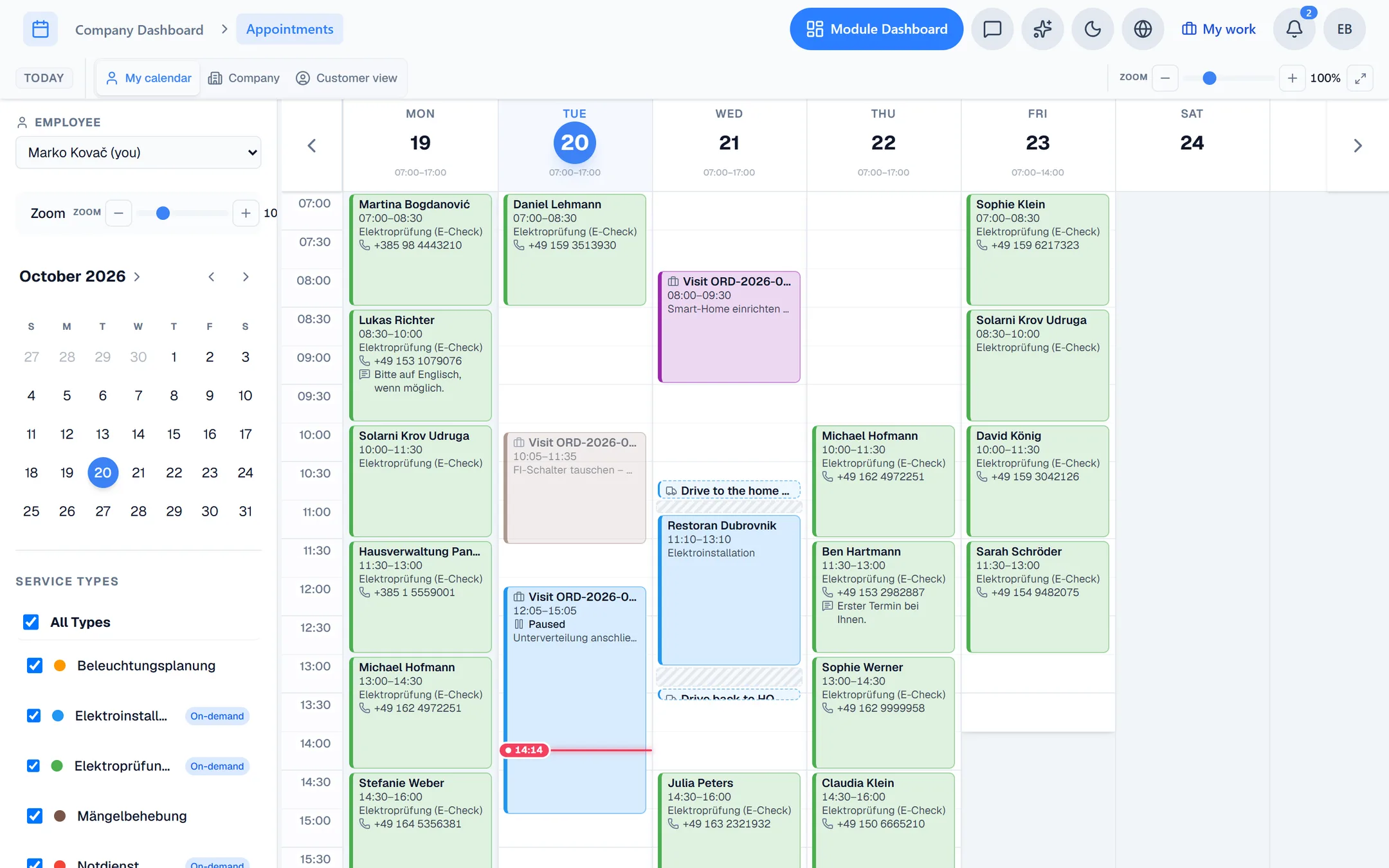
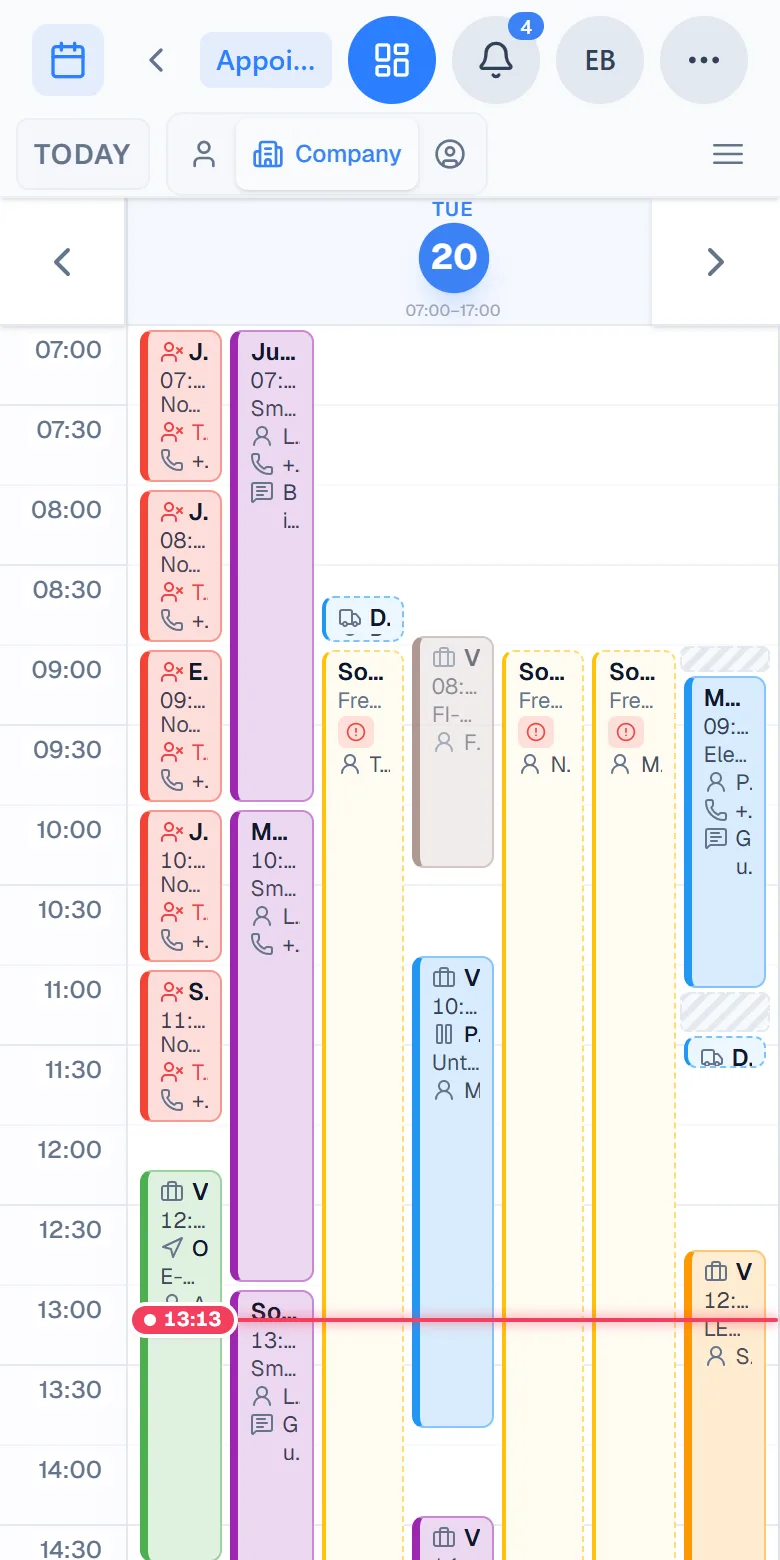
People, vehicles, tools and materials are reserved together for the window the job actually occupies. If any one of them is not free, the slot is never offered — so the double-booked van stops being possible.
- 2
Skills and qualifications decide who can be booked
Work that needs a qualification can only be assigned to someone who holds it. You stop finding out about the mismatch on site.
- 3
Absences and stock are part of availability
Holiday, sick leave and working hours feed straight into who can be booked. Stock levels feed into whether a job can go ahead, so a part running low surfaces before it stops a job rather than after.
- 4
When somebody is off, you see the new plan first
Sick leave or holiday triggers a proposed re-plan — who else holds the right skills, who has a free window, what still fits. You approve it before anything changes, and the plan stops living in one person’s head.
- 5
The same proposals for vans and equipment
In developmentPut a vehicle into maintenance today and you can see every job it is reserved for, then decide what happens to each. Having Capwork propose the swap for equipment the way it already does for people is in development.
See it with real data
Open an example business with staff, skills, vehicles and stock already set up. Mark somebody off sick and watch what the schedule proposes. No signup, nothing to install.
What you need for this
Usage-based, so a quiet month costs less. Start with the team and add vehicles or stock when they earn their place.
FAQ
No. Start with people and the one resource that actually causes your problems — usually vehicles. You can add tools and materials later; both belong to the stock module and are priced separately.
Skills and qualifications are recorded against each person, and services state what they require. Availability is then derived from the overlap, so an unqualified assignment cannot be created.
Yes, each person sees their own work, in their own language, on their phone. What they can see beyond that is controlled by their role.
Their absence removes them from availability, and Capwork proposes cover from whoever has the right skills and a free window. You see the proposed plan and approve it before anything moves.
Put it into maintenance and you can see every job it is currently reserved for, so nothing is discovered on the morning. Choosing what happens to those jobs is yours for now — automatic replacement proposals for vehicles and equipment, the way sick leave already works for people, are in development.
Yes. Travel time and the vehicle are part of what a job reserves, so a day of on-site work is planned as it really happens rather than as a row of back-to-back appointments.
More you can put right
Online booking
Online appointment booking for your website
No-shows and double-bookings
Stop no-shows and double-bookings
Enquiries in five places
Get every customer enquiry into one inbox
Where the money goes
Know where your money actually goes
Staff roster
Staff roster online — with bookings and hours balances
Planning the day
Plan the week without re-planning it twice
Running out of stock
Stop jobs stalling on a missing part
Services in 24 languages
A service catalog in 24 languages, with product images
Customer records
Customer records that keep themselves up to date
Fleet under control
Fleet management: due dates, logbook and reservations
Suppliers at a glance
Supplier management — straight from your invoices
Nothing slips through
Tasks and approvals: so nothing slips through
Make what you can commit to visible
Add your team, your vehicles and your equipment, and Capwork knows what you can promise.